- 15-20% Off on Select Products Listed on Our Online Store

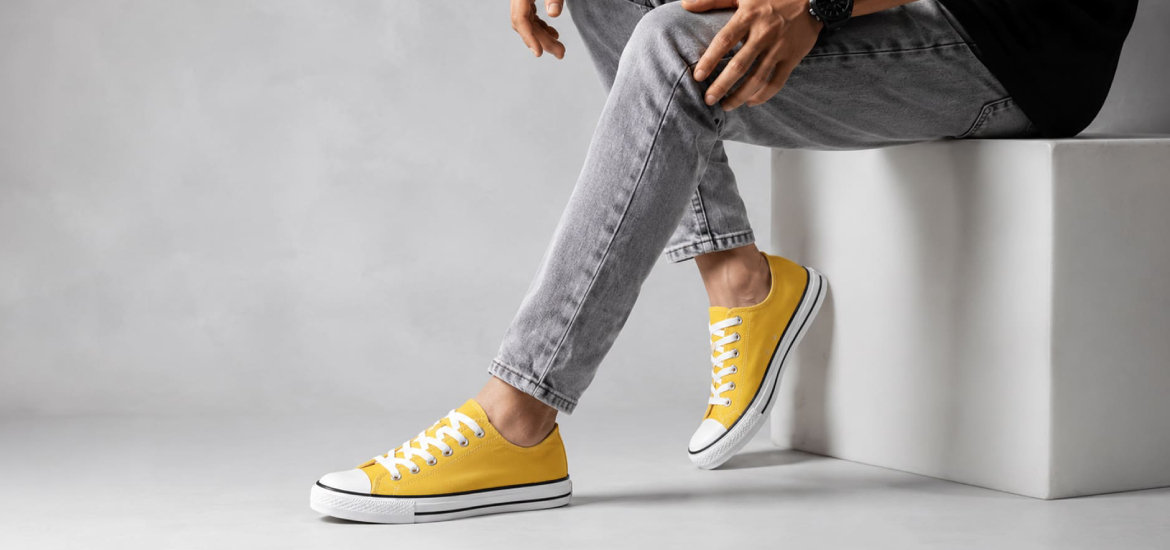
People end up judging shoes in seconds. They notice color, shape, heel height, material, and overall style, and that’s enough to make a decision. However, there are other small details that rarely receive the kind of attention that they actually deserve. Such elements impact the comfort, practicality, and visual appeal of every pair.
How a shoe fits, moves, ages, and works with different outfits are all impacted by seemingly minor design decision, which can include things like placement of the seams and the shape of the toe box. When shopping for a new pair, you must focus on such features. This allows you to understand how two similar-looking pairs can feel completely different. Let’s dive in.
The front end of your shoe is not purely a visual feature, it has a significant influence on the fit and the appearance of the shoe as a whole. Toe boxes come in multiple shapes, including round, square, pointed, almond-shaped, and somewhere between all these forms.
A sharper silhouette is created by a narrow toe box, whereas, a broader design can help in achieving a more relaxed visual profile. Internal space also has a role to play. Feet generally vary in width and toe alignment, making internal space essential.
Look beyond whether the toe shape matches your style or not, when you’re shopping for shoes. The first thing to consider is how your toe sits inside the shoe. While a design can look spacious from the outside, it may provide you with less usable room internally due to the padding, lining, or even the construction.
The focus is always one height, when people examine heels. Nevertheless, another important aspect is to understand where the heel sits underneath the shoe. While some heels are positioned directly beneath the back of the foot, there are a lot others where they sit inwardly. How your shoe feels while standing or walking is also impacted by the width and the shape of your shoe.
Noticeably different experiences are created by two pairs with identical heels. This is because of the heel structure. They tend to distribute the heel pressure differently. Thus, you must never judge footwear based only on the number used to describe the heel height. This can be manipulative.
Rather, you must look at the entire heel structure. This includes the position, width, angle, and connection used to the sole.
You may easily overlook stitching, especially when the threads used closely match the material of the shoe. However, stitches have a structural role, apart from the decorative one. With visible stitches, panels can be outlined, particular sections can be reinforced, and contrast can be created intentionally.
A refined visual effect is created by closely spaces stitches, whereas, larger stitching can significantly contribute to rugged or casual character.
Where the stitching lines meet and how consistently they follow the shoe’s shape are two essential aspects to look for. Both these elements have significant contribution to the overall visual finish associated with a pair.
Besides, versatility is also influenced by decorative stitching. Minimal stitching often tends to blend with different outfits easily. On the other hand, a stronger visual statement is created by contrast stitching.
When people consider grip and thickness, outsole gets plenty of attention. Nevertheless, we tend to ignore the edge surrounding it frequently. The visual weight of your footwear can dramatically change due to this edge.
Your shoe appears heavier and more substantial, if it has a thick, pronounced sole. A narrow edge, on the other hand, creates a lighter silhouette. Another difference is made by the color. The upper is separated from the bottom by a contrasting sole, whereas a more continuous appearance is created by matching soles.
So, before you decide whether a footwear looks too chunky or too delicate for an outfit, examining the sole edge is essential. This is responsible for much of the impression that the shoe is making.
Built around curves, openings, and transitions, shoes are three-dimensional objects. Thus, useful information about the fit is revealed by small gaps around the heel, ankle, or even the sides. When you’re trying on a footwear, always check whether the shoe is following the shape of your foot as you stand and move.
When taking several steps, watch what happens around the heel. Such observations can be more beneficial than simply asking whether the stated size seems correct or not. The starting point is generally your usual size, but it’s not the complete answer. The construction and shape of your shoe decides how actually fits you.
All the visual attention is generally received by the exterior of the shoe. However, the interior requires examination too! With lining, you can create the surface that interacts directly with much of your foot. Different linings may vary in texture, thickness, flexibility, and even construction.
Across separate internal areas, some shoes may use different materials. Whenever possible, run your fingers along the interior of the shoe. You must look for prominent joints, raised sections, or noticeable changes in texture. Then consider how such areas correspond with your foot.
While this simple inspection take merely seconds, it can provide useful information that photographs and exterior appearances don’t.
Laces, buckles, straps, elastic panels, and other fastening systems are majorly considered to be decorative elements. However, in practice they tend to strongly influence adjustability. With laces, tension is modified across several points.
Predetermined adjustment positions are offered by buckles, whereas, elastic sections can offer flexibility without requiring any manual adjustment. With straps particular areas are kept in the correct position.
As much as the type do, the placement of these features also matters a lot. For example, a beautiful strap positioned where your foot naturally bends tend to feel very different from the one sitting slightly higher or lower. Rather than judging appearance alone, you must examine fastening placement in relation to your own movement.
The upper of any shoe is rarely one uninterrupted piece, when you look closely at your shoe. Multiple panels are generally joined together to form the upper. With these panels, structure, shape, visual contrast, and flexibility are ensured. Due to their arrangement, a pair can appear streamlined, sporty, traditional, bold, or understated.
Where the material bends while you walk is also dependent on panel placement. There are sections that are intentionally positioned around areas that required movement. Contrarily, there are other sections that provide additional structure.
Similar footwear designs become easier to distinguish between when you look closely at panel construction. The character of a pair is completely altered with small changes in these lines.
While occupying only a tiny percentage of your shoes, eyelets, buckles, chains, rings, hooks, studs, and decorative pieces, yet they often attract considerable visual attention. How formal, casual, dramatic, or understated your shoe looks depend on the size and finish of the hardware that’s used.
While small matching components tend to blend into the design, oversized or contrasting hardware becomes the focal point here. When you’re coordinating your shoes with your clothing and accessories, such details tend to matter a lot.
If there are already several prominent elements in your outfit, visual balance is created by understated shoe hardware. On the other hand, in the case of minimal clothing, noticeable hardware can introduce additional personality without requiring any elaborate footwear at at all.
Great shoe shopping is not simply about finding an attractive silhouette. It involves understanding how dozens of small decisions work together.
Toe shape affects space and appearance. Stitching influences structure and visual character. Soles change proportions. Fastenings affect adjustability. Linings shape the internal experience, while heel placement, panels, hardware, and flex points contribute additional differences.
You do not need to analyze every shoe like a designer. Simply slow down for an extra minute before making your decision. Look inside. Examine the seams. Walk several steps. Check the heel. Notice where the shoe bends.
The details you once ignored may become the very things that help you distinguish between a pair that merely looks appealing and one you will actually want to keep wearing.