- 15-20% Off on Select Products Listed on Our Online Store

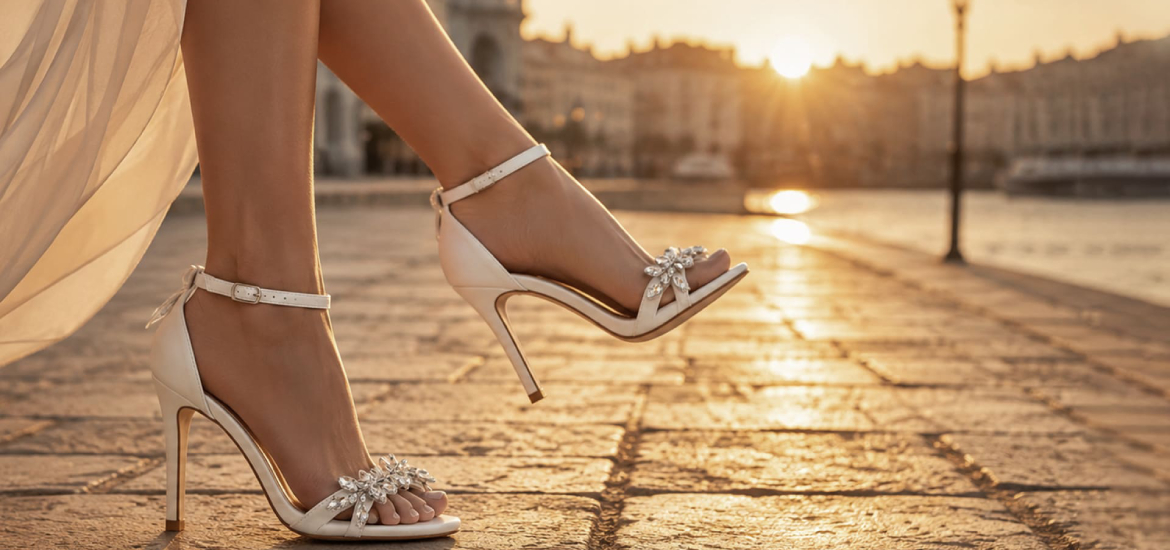
An unusual question is created when you try on new shoes. The question is whether the shoe should feel immediately comfortable or will it change after several wears. There’s a common assumption that stiffness, pressure, and slight discomfort are simply parts of wearing a new footwear. Whereas, there are people who expect that every new pair will feel effortless from the first step itself.
Well, the reality is more nuanced! There’s a possibility that materials will soften, soles will become more flexible, and footwear will adapt slightly through ordinary use. Nevertheless, you should automatically dismiss significant pressure, slipping, pinching, or restricted movement as a part of the breaking-in period.
Before committing to a pair, you should understand what new shoes should feel, so that you make informed and better decisions altogether.
Valuable information is provided by the first few moments in new shoes. Don’t just concentrate on individual areas, rather start by considering the overall sensation. As yourself the following questions:
Do the shoes feel safe without squeezing?
Can you stand naturally?
Does your foot remain stable when you walk?
Are you immediately aware of one particular pressure point?
As the material and construction have not yet experienced repeated movement, new footwear may feel different from a well-worn pair. Different doesn’t necessarily mean uncomfortable however.
Ideally, a pair of shoe should feel comfortable for the very beginning. While mild unfamiliarity can be expected, obvious pain and substantial pressure is a big no. Don’t simply ignore these issues.
One of the first places to evaluate is the front of the shoe. If the shoe is forcing your toes to sit into an unnatural arrangement, instead of sitting naturally, the shoe is not suitable for you. How much space is available varies depending on footwear design, toe shape, and construction as well.
If the shoe has a pointed exterior, it doesn’t automatically mean that your toes should extend into the narrow part. Additional length is included in many pointed designs. This extends beyond where the actual toe naturally sits.
Walk several steps and notice whether your toes repeatedly contact the front. Also consider whether the sides feel compressed. Do not assume severe tightness will disappear after repeated wear. Some materials may become more flexible, but the fundamental dimensions of the shoe remain important.
When you’re evaluating new shoes, heel movement is another important factor to consider. The general feeling at your heel should be appropriate positioning inside the shoe. If it’s moving excessively with every step, you’re doomed! Nevertheless, there’s an expected amount of movement, which depends on the design of the footwear.
In certain constructions, a small amount of movement may appear, particularly if the sole hasn’t already become more flexible. However, if it’s slipping significantly, it’s indicative of the fact that the shape and size of the shoe is not working well with your foot.
Besides, pay attention to friction as well. Longer periods of walking can make the sensation of the back edge rubbing repeatedly the same area more intense. Instead of taking only a few cautious steps, make sure you’re walking at your normal pace for some time.
Firmness in new shoes is generally more profound that what you experience in shoes worn for months. That difference alone is not the problem necessarily. Material initially tends to resist movement, soles tend to feel less flexible, and uppers may hold their original shape more strongly.
The evident distinction is between firmness and discomfort. Firmness feels like the structure that surrounds your foot. Pain on the other hand is the pinching sensation, sharp pressure, excessive compression, or any other unpleasant sensation that you may feel. Such a sensation tends to force you to remove the shoes.
Reconsider the fit, if you’re hoping that substantial discomfort will disappear eventually. You need not endure significant pain for breaking in footwear.
When choosing the shoe size, length received plenty of attention. However, width tends to be equally important. There are shoes that offer adequate space in front of your toes, but still end up feeling too restrictive across the widest part of your foot.
Conversely, unnecessary movement is allowed by excessive width. You must stand normally and notice how the upper interacts with both sides of your foot. The key is in ensuring that the shoe feels safe. However, you must not also feel that your foot is being strongly compressed.
You must look at the material as well. If there’s excessive bulging or obvious distortion, it can also indicate that your foot and the shoe are not working comfortably together. Width is an important individual assessment, as it varies significantly.
The upper-middle portion of the foot is known as the instep. It is surprisingly easy to overlook the instep during fitting. The shoe itself may apply pressure across this area, depending on the design, laces, or the upper. Ideally, it’s essential for the shoe to hold your foot in a safe manner without creating any excessive downward pressure at all.
With laced footwear, you may enjoy some adjustment, simply because tension can be modified. However, you end up with lower flexibility with other designs. Thus, simply putting on a pair and looking at a pair doesn’t count as a complete fitting experience for any new shoe.
With your foot naturally bending as you walk, your footwear needs to accommodate such a movement. When you’re taking several steps, always notice where the shoe flexes. The ideal flex point in normal conditions should correspond where your foot bends.
Movement tends to feel unnatural, even when the length appears correct, if the shoe bends at an awkward location. New soles tend to initially feel somewhat stiff, which is totally dependent on the construction and the material. With repeated movement over time, flexibility levels tend to increase.
Nevertheless, stiffness should not prevent you from walking naturally. You should always be able to take naturally without the need for taking dramatic measures for altering your movement.
The opening around your foot can reveal additional fit issues. Depending on the shoe style, the sides should generally follow the foot without creating substantial gaps or digging into the skin. Pay particular attention when walking because movement can expose problems that are invisible while standing.
If the sides spread dramatically, the internal shape may not correspond well with your foot. If the opening presses strongly into a particular area, consider whether extended wear would increase that sensation. Different footwear constructions behave differently, so there is no universal rule for exactly how every opening should sit. The objective is stable, unrestricted movement.
The socks you wear during a fitting can significantly influence how shoes feel. Thicker socks occupy more internal space, while thinner versions create less volume. If you try shoes with one type and regularly wear them with another, your later experience may differ.
Whenever possible, evaluate footwear with socks similar to those you expect to wear regularly. This becomes particularly relevant with enclosed shoes where relatively small differences in internal volume can affect fit.
The same principle applies to going without socks. If that is how you intend to wear the footwear, consider the internal texture, seams, and edges that will come into direct contact with your feet.
The general feeling you get when wearing a new shoe should be safe, appropriately spacious, and compatible with your natural movement. While they may feel firmer than older pair and the sole might initially resist bending slightly, such characteristics change somewhat through normal use. Besides, the experience may be noticeably different due to new materials.
Attention should be given to significant pain, persistent pinching, substantial slipping, restricted toes, or obvious pressure. Don’t simply ask yourself whether uncomfortable shoes will eventually become wearable. Rather, consider whether the fundamental fit already seems to be right or not.
There’s no necessity that a new pair of shoes has to be the usual fit and should offer the same level of comfort as your old pair from the moment you wear them. But it should ensure that you’re confident enough that when you’re wearing them, it feels natural. It should not be something that your feet must learn to tolerate.